在 Spring Cloud 微服务开发中,我们都知道,要想在不重启应用的前提下,修改的配置能动态刷新并且生效,我们只需要在对应的类上加上 @RefreshScope 注解即可。
但最近一次项目开发过程中,我们却遇到了一个动态刷新不生效的问题
使用的场景如下:
1
2
3
4
5
6
7
8
9
10
11
12
13
14
15
16
@Component @RefreshScope public class ConfigUtil { private static String myKey; @Value("${mykey}") public void initMyKey (String myKey) { ConfigUtil.myKey = myKey; } public static String getMyKey () { return myKey; } }
通过 ConfigUtil#getMyKey 方法获取配置值,会发现修改配置后动态刷新并不生效。
本着“知根知底”的原则,我们决定先探究下 @RefreshScope 的实现原理。
从@Scope说起 @Scope 是 Spring 中 Bean 的作用域,它主要有以下几种类型:
名称
描述
singleton
默认类型,单例,表示 Spring 容器中只会创建该 bean 的一个实例
prototype
每次调用都会创建一个新的 bean 实例
request
在 web 应用中使用,每个 http 请求都有一个 bean 实例
session
在 web 应用中使用,每个 http 会话都有一个 bean 实例
application
在 web 应用中使用,全局共享
而 Spring Cloud 则在此基础上增加了 refresh 的作用域,包装为 @RefreshScope 注解 ,用于实现配置的动态刷新。
@RefreshScope 做了什么 在 @RefreshScope 注解定义中:
1
2
3
4
5
6
7
8
9
10
11
12
13
@Target({ ElementType.TYPE, ElementType.METHOD }) @Retention(RetentionPolicy.RUNTIME) @Scope("refresh") @Documented public @interface RefreshScope { ScopedProxyMode proxyMode () default ScopedProxyMode.TARGET_CLASS; }
我们注意到有个 proxyMode 属性,默认为 ScopedProxyMode.TARGET_CLASS ,这其实表明了 Spring 将对该类创建代理对象。
@RefreshScope 的解析 在 Spring Boot 对配置类进行扫描并生成 BeanDefinition 的过程中,首先会通过 ScopedProxyUtils#createScopedProxy 生成代理类的 BeanDefinition:
1
2
3
4
5
6
7
8
9
10
11
12
13
14
15
16
17
18
19
20
21
22
23
24
25
26
27
28
29
30
31
32
33
34
35
36
37
38
39
40
41
42
43
44
45
46
47
48
public static BeanDefinitionHolder createScopedProxy (BeanDefinitionHolder definition, BeanDefinitionRegistry registry, boolean proxyTargetClass) { String originalBeanName = definition.getBeanName(); BeanDefinition targetDefinition = definition.getBeanDefinition(); String targetBeanName = getTargetBeanName(originalBeanName); RootBeanDefinition proxyDefinition = new RootBeanDefinition (ScopedProxyFactoryBean.class); proxyDefinition.setDecoratedDefinition(new BeanDefinitionHolder (targetDefinition, targetBeanName)); proxyDefinition.setOriginatingBeanDefinition(targetDefinition); proxyDefinition.setSource(definition.getSource()); proxyDefinition.setRole(targetDefinition.getRole()); proxyDefinition.getPropertyValues().add("targetBeanName" , targetBeanName); if (proxyTargetClass) { targetDefinition.setAttribute(AutoProxyUtils.PRESERVE_TARGET_CLASS_ATTRIBUTE, Boolean.TRUE); } else { proxyDefinition.getPropertyValues().add("proxyTargetClass" , Boolean.FALSE); } proxyDefinition.setAutowireCandidate(targetDefinition.isAutowireCandidate()); proxyDefinition.setPrimary(targetDefinition.isPrimary()); if (targetDefinition instanceof AbstractBeanDefinition) { proxyDefinition.copyQualifiersFrom((AbstractBeanDefinition) targetDefinition); } targetDefinition.setAutowireCandidate(false ); targetDefinition.setPrimary(false ); registry.registerBeanDefinition(targetBeanName, targetDefinition); return new BeanDefinitionHolder (proxyDefinition, originalBeanName, definition.getAliases()); }
这里针对被 @Scope 修饰的 bean ,另外生成了一个类型为 ScopedProxyFactoryBean 的代理类 bean 定义,并注册到 Spring 容器,同时隐藏了对原 bean 修改为不参与注入,该代理 bean 定义保留了原 bean 的基本定义,可以看出,依赖原 bean 的地方在被注入依赖时使用的是该代理 bean 。
创建代理对象 在得到代理 bean 的定义后,将首先经过 RefreshScope 的处理:
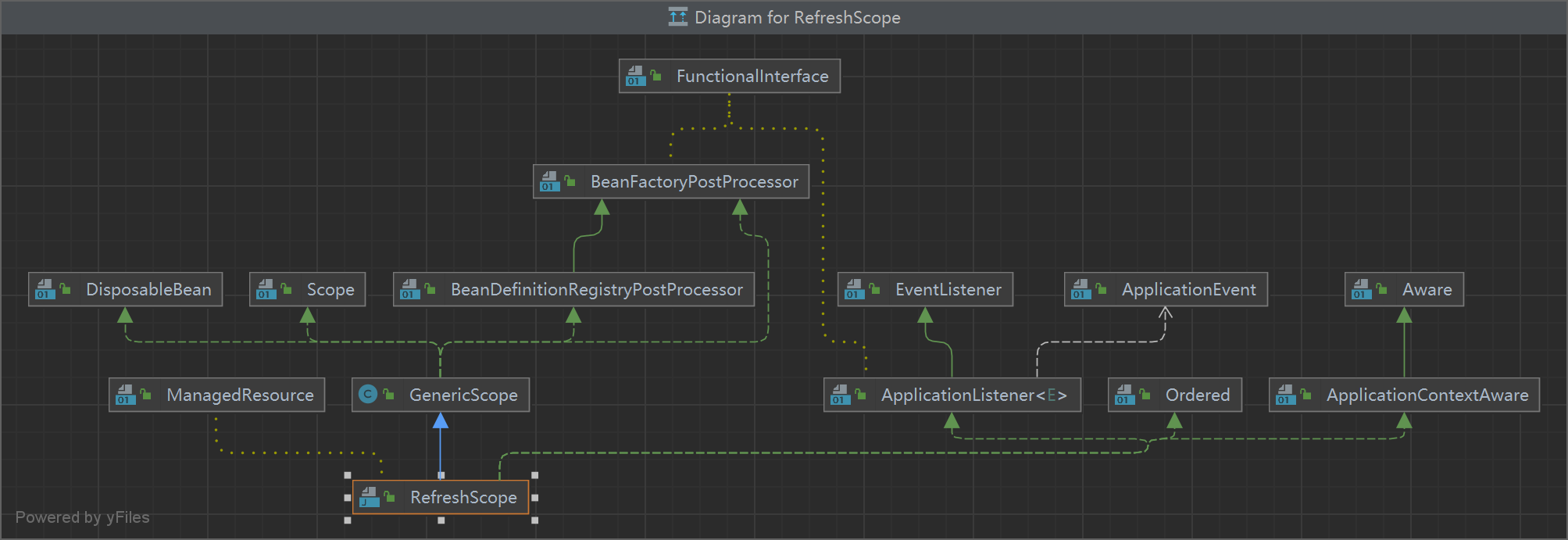
RefreshScope 继承了 BeanDefinitionRegistryPostProcessor 和 BeanFactoryPostProcessor ,在 Spring Boot 实例化 bean 前,会先后经过这两种类型的处理器的扩展点处理。
RefreshScope#postProcessBeanDefinitionRegistry :
1
2
3
4
5
6
@Override public void postProcessBeanDefinitionRegistry (BeanDefinitionRegistry registry) throws BeansException { this .registry = registry; super .postProcessBeanDefinitionRegistry(registry); }
GenericScope#postProcessBeanDefinitionRegistry :
1
2
3
4
5
6
7
8
9
10
11
12
13
14
15
16
17
18
19
20
21
22
@Override public void postProcessBeanDefinitionRegistry (BeanDefinitionRegistry registry) throws BeansException { for (String name : registry.getBeanDefinitionNames()) { BeanDefinition definition = registry.getBeanDefinition(name); if (definition instanceof RootBeanDefinition) { RootBeanDefinition root = (RootBeanDefinition) definition; if (root.getDecoratedDefinition() != null && root.hasBeanClass() && root.getBeanClass() == ScopedProxyFactoryBean.class) { if (getName().equals(root.getDecoratedDefinition().getBeanDefinition() .getScope())) { root.setBeanClass(LockedScopedProxyFactoryBean.class); root.getConstructorArgumentValues().addGenericArgumentValue(this ); root.setSynthetic(true ); } } } } }
GenericScope#postProcessBeanFactory :
1
2
3
4
5
6
7
public void postProcessBeanFactory (ConfigurableListableBeanFactory beanFactory) throws BeansException { this .beanFactory = beanFactory; beanFactory.registerScope(this .name, this ); setSerializationId(beanFactory); }
postProcessBeanDefinitionRegistry 主要将代理 bean 的类型设置为 LockedScopedProxyFactoryBean , postProcessBeanFactory 则将 RefreshScope 实现注册到 Spring 容器。
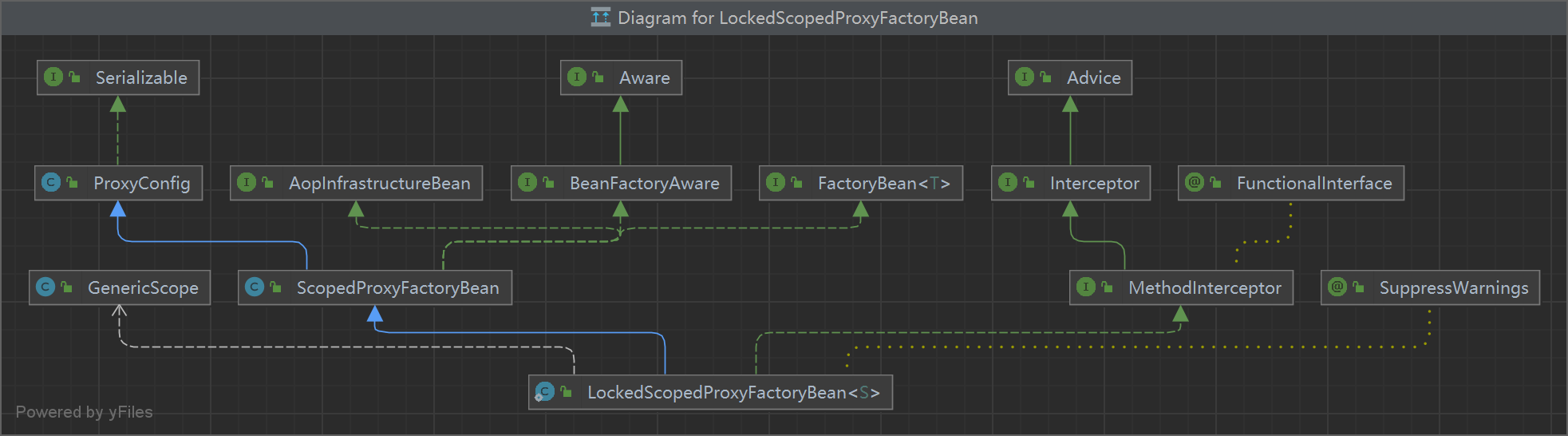
LockedScopedProxyFactoryBean 继承了 ScopedProxyFactoryBean ,其本质是一个 FactoryBean :
在 ScopedProxyFactoryBean 实例化后,setBeanFactory 将被执行,GenericScope.LockedScopedProxyFactoryBean#setBeanFactory :
1
2
3
4
5
6
7
8
9
10
11
@Override public void setBeanFactory (BeanFactory beanFactory) { super .setBeanFactory(beanFactory); Object proxy = getObject(); if (proxy instanceof Advised) { Advised advised = (Advised) proxy; advised.addAdvice(0 , this ); } }
ScopedProxyFactoryBean#setBeanFactory :
1
2
3
4
5
6
7
8
9
10
11
12
13
14
15
16
17
18
19
20
21
22
23
24
25
26
27
28
29
30
31
32
33
34
@Override public void setBeanFactory (BeanFactory beanFactory) { if (!(beanFactory instanceof ConfigurableBeanFactory)) { throw new IllegalStateException ("Not running in a ConfigurableBeanFactory: " + beanFactory); } ConfigurableBeanFactory cbf = (ConfigurableBeanFactory) beanFactory; this .scopedTargetSource.setBeanFactory(beanFactory); ProxyFactory pf = new ProxyFactory (); pf.copyFrom(this ); pf.setTargetSource(this .scopedTargetSource); Assert.notNull(this .targetBeanName, "Property 'targetBeanName' is required" ); Class<?> beanType = beanFactory.getType(this .targetBeanName); if (beanType == null ) { throw new IllegalStateException ("Cannot create scoped proxy for bean '" + this .targetBeanName + "': Target type could not be determined at the time of proxy creation." ); } if (!isProxyTargetClass() || beanType.isInterface() || Modifier.isPrivate(beanType.getModifiers())) { pf.setInterfaces(ClassUtils.getAllInterfacesForClass(beanType, cbf.getBeanClassLoader())); } ScopedObject scopedObject = new DefaultScopedObject (cbf, this .scopedTargetSource.getTargetBeanName()); pf.addAdvice(new DelegatingIntroductionInterceptor (scopedObject)); pf.addInterface(AopInfrastructureBean.class); this .proxy = pf.getProxy(cbf.getBeanClassLoader()); }
经过 setBeanFactory 处理后,代理对象被创建完成,同时 LockedScopedProxyFactoryBean 作为一个 FactoryBean ,在 getObject 方法中,也会返回该代理对象。
另外, LockedScopedProxyFactoryBean 自身也被作为切面通知添加到通知列表,在调用目标对象的方法时,将执行自身定义的 GenericScope.LockedScopedProxyFactoryBean#invoke 方法。
目标对象的实例化 在 Spring Boot 启动后,会触发一次 目标对象的实例化,RefreshScope#onApplicationEvent :
1
2
3
4
5
6
7
8
9
10
11
12
13
14
15
16
17
18
19
20
21
22
23
24
public void onApplicationEvent (ContextRefreshedEvent event) { start(event); } public void start (ContextRefreshedEvent event) { if (event.getApplicationContext() == this .context && this .eager && this .registry != null ) { eagerlyInitialize(); } } private void eagerlyInitialize () { for (String name : this .context.getBeanDefinitionNames()) { BeanDefinition definition = this .registry.getBeanDefinition(name); if (this .getName().equals(definition.getScope()) && !definition.isLazyInit()) { Object bean = this .context.getBean(name); if (bean != null ) { bean.getClass(); } } } }
同时,如果代理对象方法被调用时,也会触发目标对象的实例化,GenericScope.LockedScopedProxyFactoryBean#invoke :
1
2
3
4
5
6
7
8
9
10
11
12
13
14
15
16
17
18
19
20
21
22
23
24
25
26
27
28
29
30
31
32
33
34
35
36
37
38
39
40
@Override public Object invoke (MethodInvocation invocation) throws Throwable { Method method = invocation.getMethod(); if (AopUtils.isEqualsMethod(method) || AopUtils.isToStringMethod(method) || AopUtils.isHashCodeMethod(method) || isScopedObjectGetTargetObject(method)) { return invocation.proceed(); } Object proxy = getObject(); ReadWriteLock readWriteLock = this .scope.getLock(this .targetBeanName); if (readWriteLock == null ) { if (logger.isDebugEnabled()) { logger.debug("For bean with name [" + this .targetBeanName + "] there is no read write lock. Will create a new one to avoid NPE" ); } readWriteLock = new ReentrantReadWriteLock (); } Lock lock = readWriteLock.readLock(); lock.lock(); try { if (proxy instanceof Advised) { Advised advised = (Advised) proxy; ReflectionUtils.makeAccessible(method); return ReflectionUtils.invokeMethod(method, advised.getTargetSource().getTarget(), invocation.getArguments()); } return invocation.proceed(); } catch (UndeclaredThrowableException e) { throw e.getUndeclaredThrowable(); } finally { lock.unlock(); } }
SimpleBeanTargetSource#getTarget :
1
2
3
4
@Override public Object getTarget () throws Exception { return getBeanFactory().getBean(getTargetBeanName()); }
熟悉的 getBean 方法,最终来到 AbstractBeanFactory#doGetBean :
1
2
3
4
5
6
7
8
9
10
11
12
13
14
15
16
17
18
19
20
21
22
23
24
25
26
27
28
29
30
if (mbd.isSingleton()) { } else if (mbd.isPrototype()) { } else { String scopeName = mbd.getScope(); final Scope scope = this .scopes.get(scopeName); if (scope == null ) { throw new IllegalStateException ("No Scope registered for scope name '" + scopeName + "'" ); } try { Object scopedInstance = scope.get(beanName, () -> { beforePrototypeCreation(beanName); try { return createBean(beanName, mbd, args); } finally { afterPrototypeCreation(beanName); } }); bean = getObjectForBeanInstance(scopedInstance, name, beanName, mbd); } catch (IllegalStateException ex) { } } }
来到 RefreshScope ,GenericScope#get :
1
2
3
4
5
6
7
8
9
10
11
12
13
public Object get (String name, ObjectFactory<?> objectFactory) { BeanLifecycleWrapper value = this .cache.put(name, new BeanLifecycleWrapper (name, objectFactory)); this .locks.putIfAbsent(name, new ReentrantReadWriteLock ()); try { return value.getBean(); } catch (RuntimeException e) { this .errors.put(name, e); throw e; } }
这里将创建 bean 的流程作为 objectFactory ,然后封装为 BeanLifecycleWrapper 类型,将放入维护的 cache 缓存,最终调用的是 GenericScope.BeanLifecycleWrapper#getBean :
1
2
3
4
5
6
7
8
9
10
public Object getBean () { if (this .bean == null ) { synchronized (this .name) { if (this .bean == null ) { this .bean = this .objectFactory.getObject(); } } } return this .bean; }
在 bean 不为空的情况下,调用 objectFactory 创建一个新的对象,那什么情况下 bean 会为空呢?
配置的刷新过程 在配置变更时, RefreshEventListener 会接收到配置变更通知,同时调用 ContextRefresher#refresh :
1
2
3
4
5
6
public synchronized Set<String> refresh () { Set<String> keys = refreshEnvironment(); this .scope.refreshAll(); return keys; }
RefreshScope#refreshAll :
1
2
3
4
5
public void refreshAll () { super .destroy(); this .context.publishEvent(new RefreshScopeRefreshedEvent ()); }
GenericScope#destroy() :
1
2
3
4
5
6
7
8
9
10
11
12
13
14
15
16
17
18
19
20
21
22
23
24
25
public void destroy () { List<Throwable> errors = new ArrayList <Throwable>(); Collection<BeanLifecycleWrapper> wrappers = this .cache.clear(); for (BeanLifecycleWrapper wrapper : wrappers) { try { Lock lock = this .locks.get(wrapper.getName()).writeLock(); lock.lock(); try { wrapper.destroy(); } finally { lock.unlock(); } } catch (RuntimeException e) { errors.add(e); } } if (!errors.isEmpty()) { throw wrapIfNecessary(errors.get(0 )); } this .errors.clear(); }
GenericScope.BeanLifecycleWrapper#destroy :
1
2
3
4
5
6
7
8
9
10
11
12
13
14
public void destroy () { if (this .callback == null ) { return ; } synchronized (this .name) { Runnable callback = this .callback; if (callback != null ) { callback.run(); } this .callback = null ; this .bean = null ; } }
可以看到,刷新实则是对缓存中的实例列表进行清空,当通过代理对象调用目标对象方法时,目标对象如果为空,将触发目标对象的重新实例化,从而实现了配置的动态刷新。
总结 回到文章开头的问题,原因就是被 @RefreshScope 修饰的类会动态生成代理对象,而静态方法的调用不会经过代理对象的处理,所以也不会触发 bean 的重新实例化。